


Two numbers solve almost every print-size question. Art should span about two-thirds of the furniture below it, and its center should sit near 57 inches from the floor. Here's the room-by-room version, with the right print for each spot. Let's get into it!
Two numbers that fix almost every wall
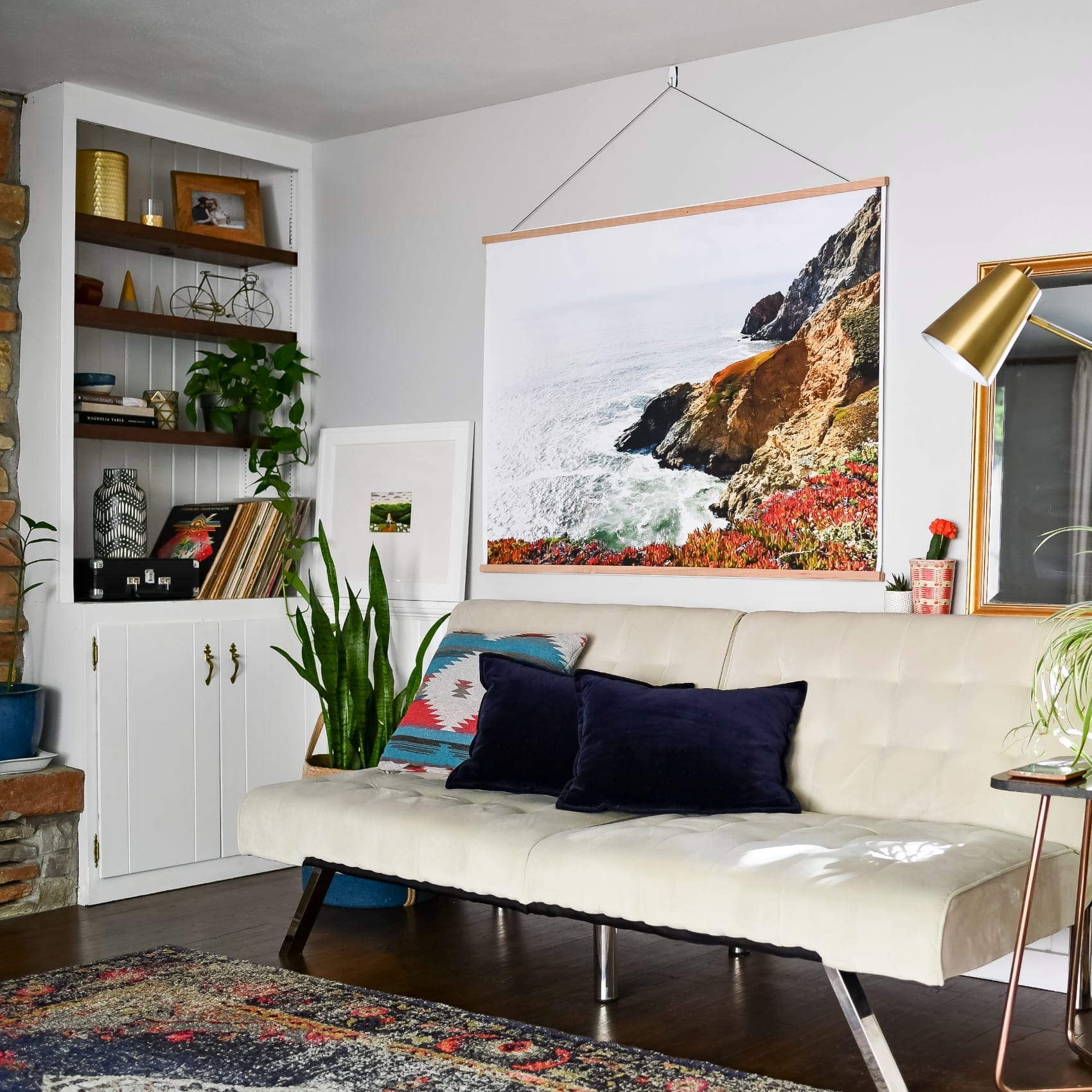
Start with width. The two-thirds rule says wall art should be two-thirds the size of the sofa, headboard, or furniture piece beneath it. Do the math on a standard 84-inch sofa and you land around 56 inches of art, either as one piece or a grouped arrangement that adds up to the same width.
Then height. Hang your print so its center sits near 57 inches from the floor, the average eye level that museums and galleries use. When the art goes above furniture, leave 6 to 8 inches between the top of the couch and the bottom of the frame.
Stand back, and the photo of your kid mid-cannonball lands right where your eyes already rest. Two numbers, almost every wall handled. No hammer, no pressure.
How big a print belongs over the sofa
The sofa anchors the room, so the print above it should feel substantial. Using the two-thirds rule, an 84-inch sofa calls for about 56 inches of art. One big piece works, and so does a tidy cluster that adds up to the same width.
This is where an Engineer Print earns its keep. It's a 3-by-4-foot statement that costs far less than custom framing, which makes it the renter-friendly way to fill a big wall fast. Want a more finished look? A large Fine Art Print at 16x20 or 20x24 reads as gallery-grade. Keep the bottom edge 6 to 8 inches above the sofa back, and you're set.
Sizing the print over your bed
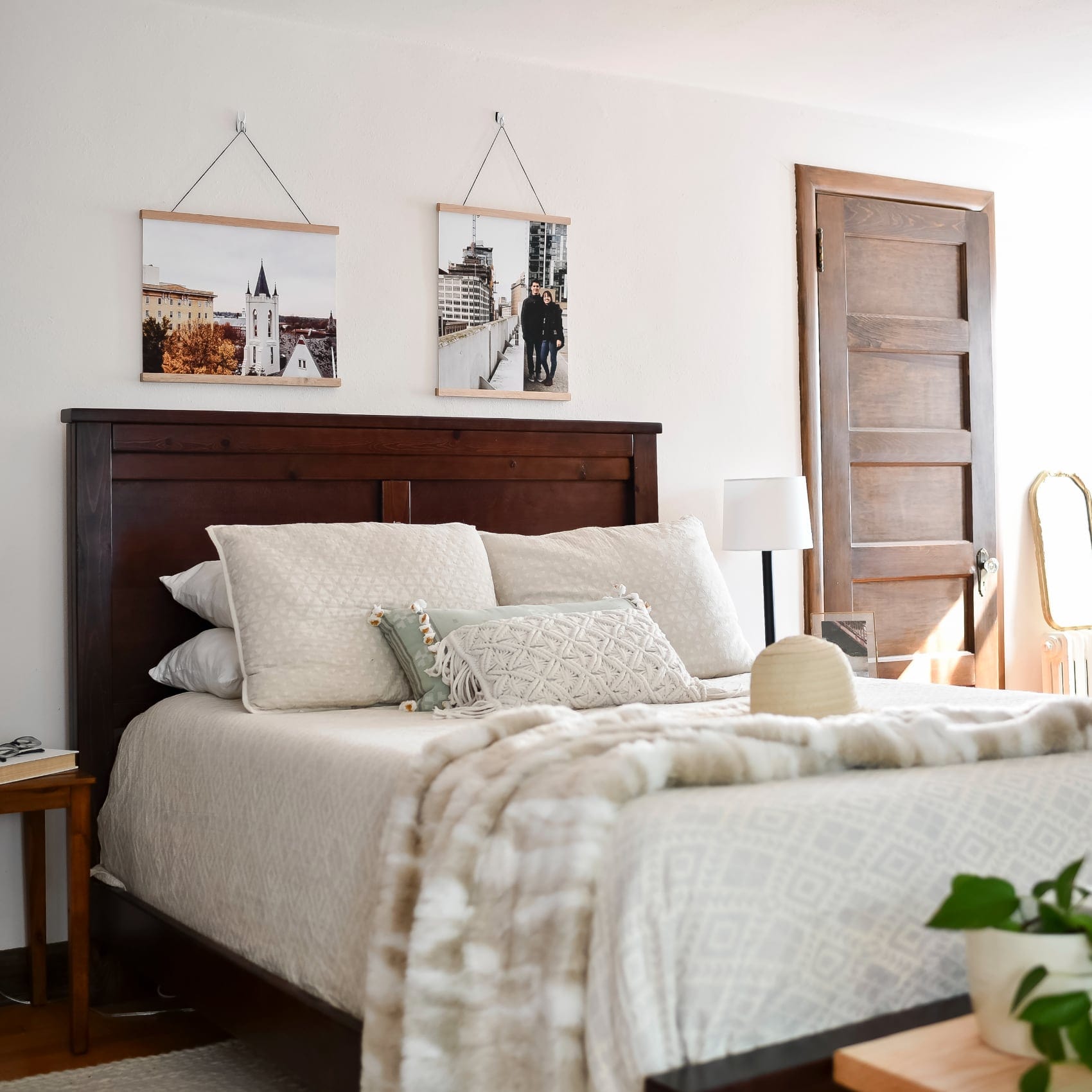
Above the bed, match the headboard, not the mattress. The same two-thirds rule applies, so size your art to about two-thirds the width of the headboard. A double bed pairs nicely with a medium-to-large single print or two smaller ones side by side, and a king carries a larger statement piece or a structured set of two or three.
A horizontal photo flatters a horizontal bed, so reach for a wide image, like a coastline, a sleepy dog stretched across the foot of the bed, or a quiet morning. A 20x24 Fine Art Print centered over the headboard anchors the whole room. The height rule still applies. Aim for a center near 57 inches, with a hand's width of space above the headboard.
Hallways and entryways go tall, not wide
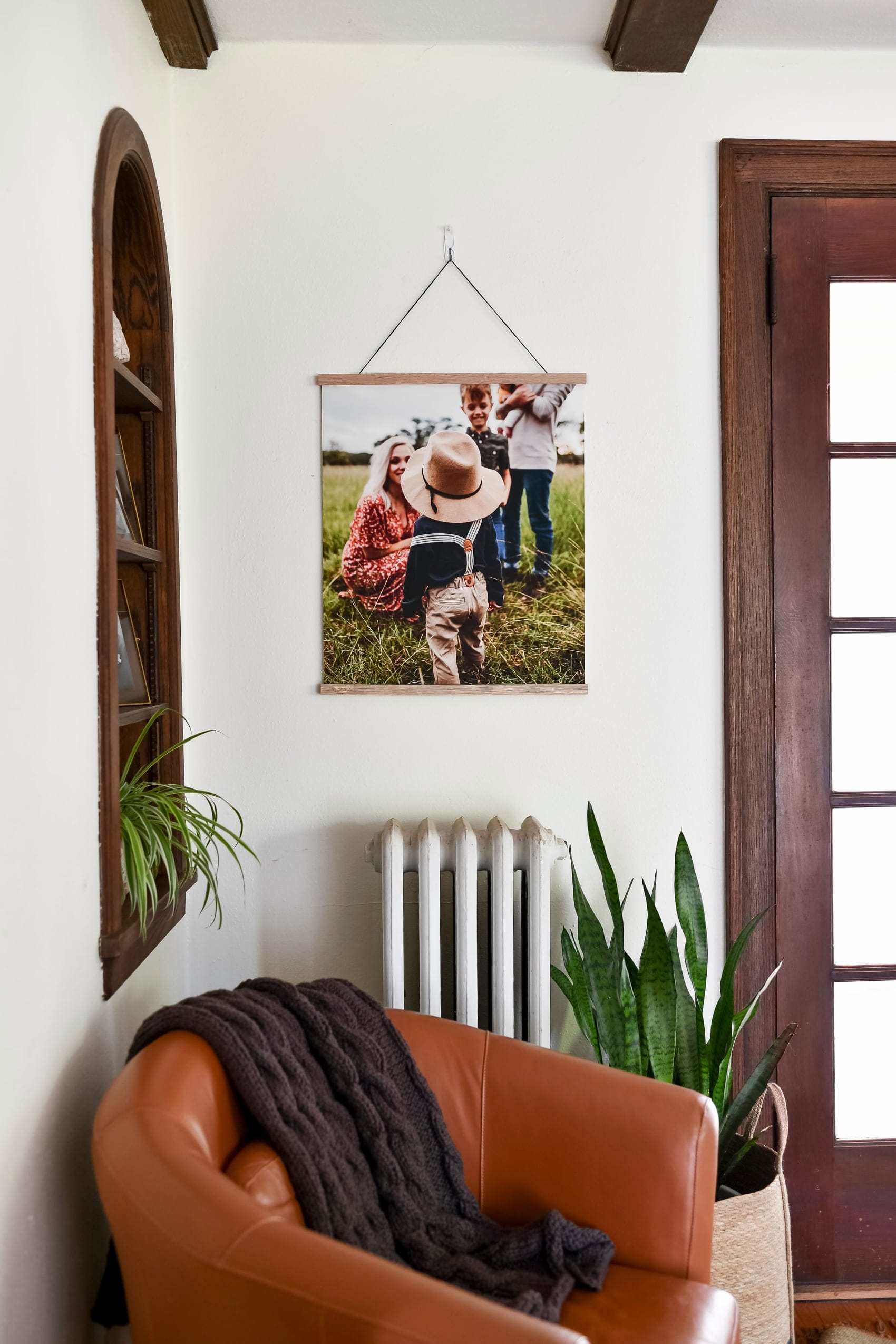
Narrow spaces flip the logic. Portrait prints are the natural fit for a hallway because the vertical shape draws the eye up and makes the ceiling feel higher. For a single statement print in a snug hallway, a tall Fine Art Print in the 16x20 or 20x24 size is the sweet spot, and a wider hallway can carry something larger still.
The entryway is your first impression, so make it count. A single print by the door, or a small vertical run of three, sets the tone before anyone takes off their coat. A pair of Square Prints in the 5.5-inch size keeps a tight entry from feeling crowded.
Small prints with big personality on the mantel and shelf
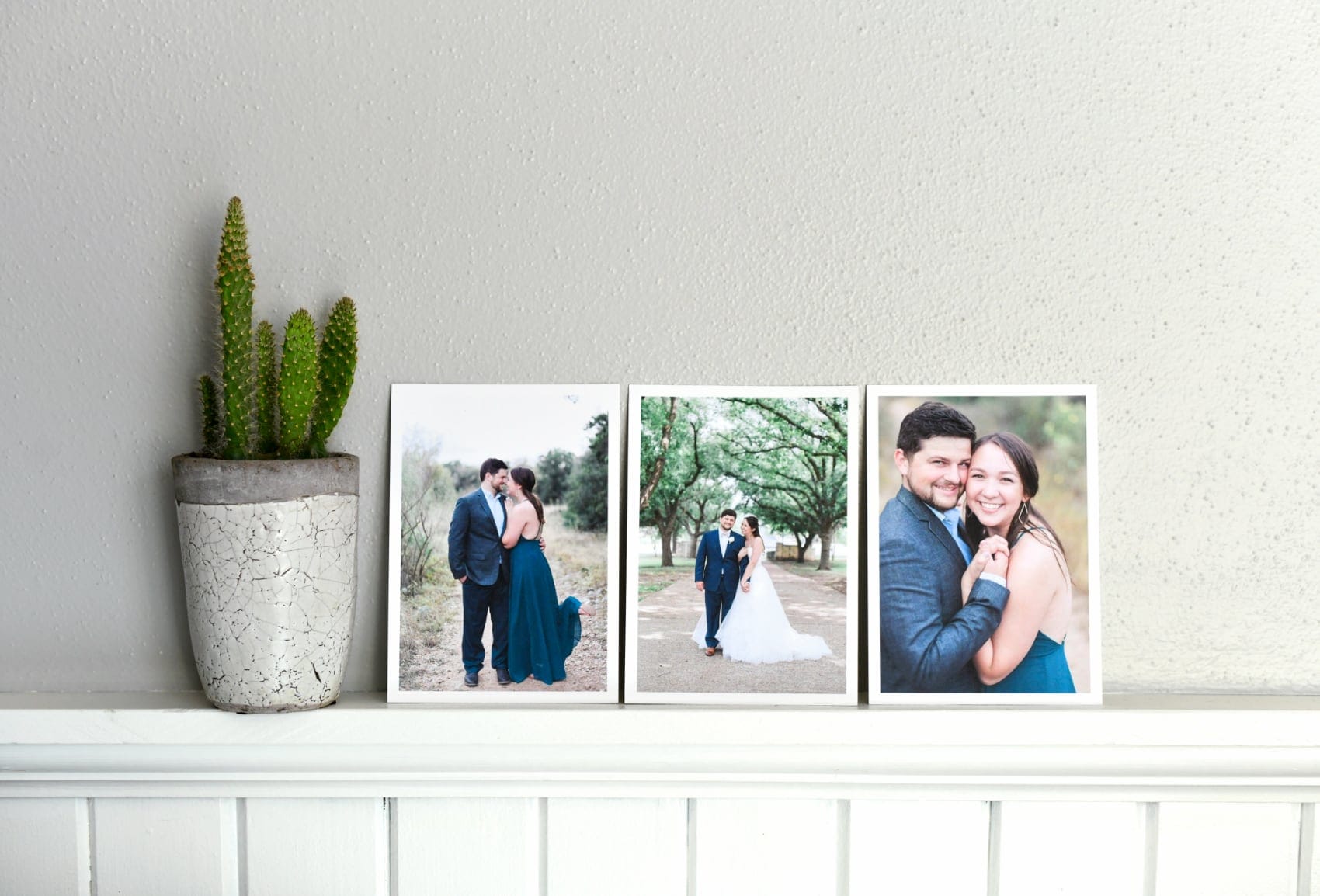
Not every photo needs a nail. On a mantel, lean the art instead of hanging it, mixing a few heights and overlapping a little so the grouping feels collected rather than staged. If you do hang above the fireplace, the two-thirds rule still works, so size the piece to about two-thirds the width of the mantel below it.
Shelves and nightstands are where the little prints shine. A 5x7 is right at home on a bedside table or an office desk, tucked between books and a small trailing plant. Square Prints at 2.75 or 4 inches are made for this, the way a sun-faded snapshot warms up a stack of cookbooks. They turn a quiet shelfie into a living, breathing memory board you can rearrange whenever the mood changes.
How to size a gallery wall
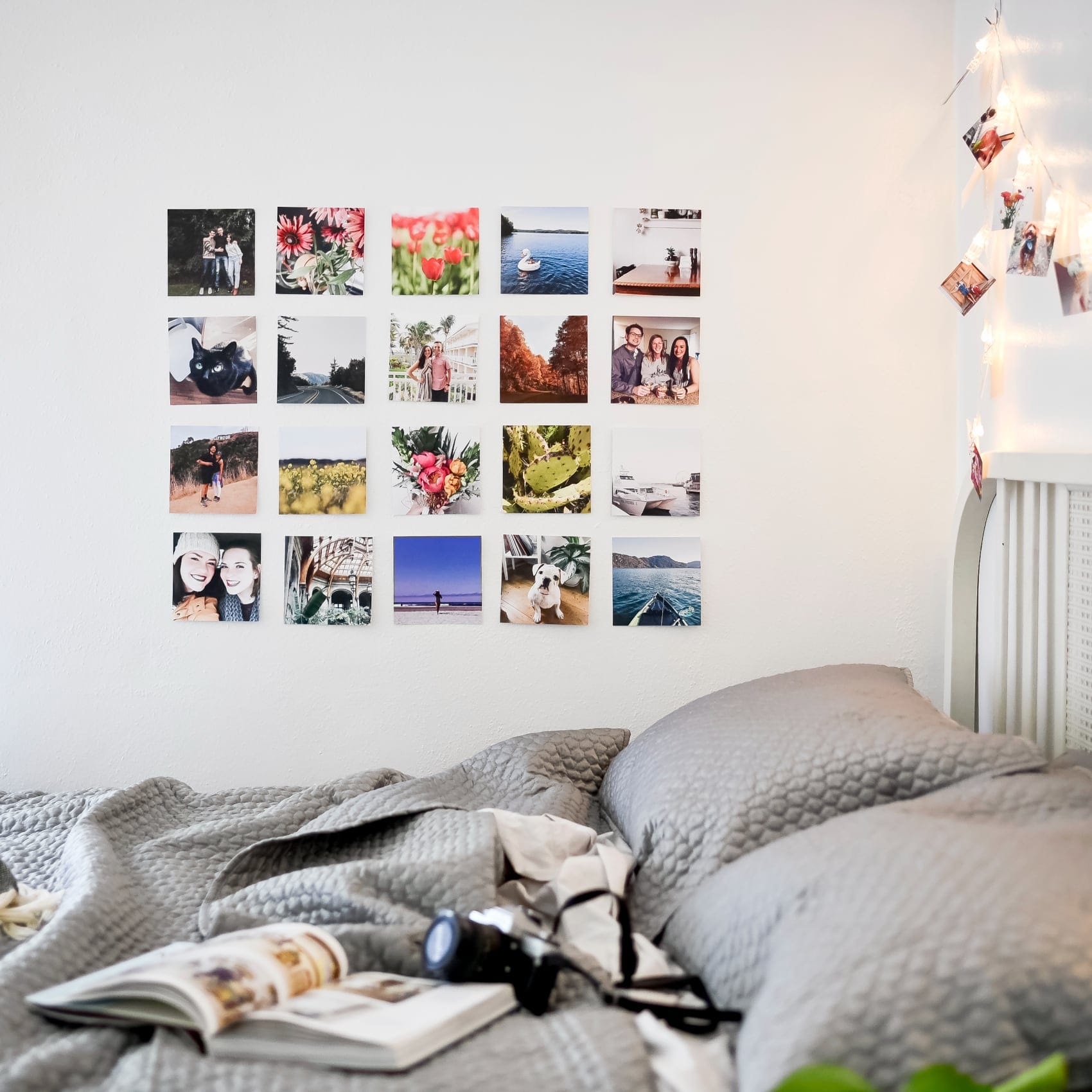
A gallery wall is just many small decisions following the same two numbers. Treat the whole arrangement as one big rectangle. It should still span about two-thirds of the furniture below and center near 57 inches. Inside it, keep frames 3 to 6 inches apart so the grid feels tight and intentional without crowding.
Mix a few sizes for rhythm. Picture the wedding portrait, the dog mid-zoomie, and three sun-washed squares finally sharing one wall. Anchor the cluster with one larger piece, then fill in with smaller prints and squares. Square Prints make the easiest building blocks because they stack into clean rows. An odd number of pieces tends to look more relaxed than an even one, though that's a guideline, not a law.
The print-size cheat sheet, room by room
- Over the sofa. About two-thirds of the sofa width (an 84-in sofa wants ~56 in of art), centered at 57 in, 6–8 in above the back.
- Over the bed. About two-thirds of the headboard width, centered at 57 in.
- Hallway. A tall, portrait-oriented print, centered at 57 in, with 3–6 in between gallery pieces.
- Entryway. A single print, or a small vertical trio, centered at 57 in.
- Mantel, shelf, or nightstand. Small prints win here, a 5x7 or 2.75–5.5 in squares, leaned rather than hung.
- Gallery wall. Mixed sizes anchored by one larger piece, the whole group centered at 57 in and 3–6 in apart.
Match the right print to the wall
Now the fun part. For a big, budget-friendly statement over the sofa or bed, an Engineer Print does the heavy lifting. For a more finished, gallery feel, Fine Art Prints come in five sizes from 8x10 to 20x24. Want the framed look without a trip to the frame shop? Floating Frame Canvas Prints arrive hand-stretched and ready to hang. And for the shelves, mantels, and gallery grids, Square Prints are the easy yes.
Feeling inspired?! Measure once, print today. 🙂


