


If your camera roll has crept past a few thousand photos, four simple questions can clear most of it in a single afternoon. Ask whether you would frame it, whether you would miss it, whether a favorite person is in it, and whether it tells a story. Everything else can stay buried in the cloud, guilt-free.
You are not behind, and you are not a hoarder. The average person keeps around 2,000 photos on their phone, and roughly 1.9 trillion photos were taken worldwide in 2024, almost all of them on smartphones. That is the water we all swim in now. You take a lot of pictures, and that's completely normal. What's missing is a simple way to decide what to actually do with them.
So let's give you one. Grab a coffee, sit somewhere comfortable, and let's get into it.

Why your camera roll feels impossible
The reason you freeze at photo number 2,000 is not laziness. Psychologists call it decision fatigue, a state of mental overload that wears down your ability to keep making choices. Every keep-or-delete is a tiny decision, and a few thousand of them in a row will flatten anyone.
The fix is to stop deciding one photo at a time. Instead, you run every photo through the same four questions and let the answers do the sorting. No agonizing, no second-guessing. This is the fun part.
The four-question framework
Here are the four questions. Ask them in order, and stop at the first clear yes.
1. Would you frame it?
Start by asking whether you would actually put the photo on a wall. This is your highest bar, and it sorts the true keepers fast. A handful of shots from any year are genuinely frame-worthy. Think of the candid one where everyone is laughing, the quiet morning light, the blurry-but-perfect photo of your dog mid-zoomie. Mark those as your stars. We'll come back to them.
2. Would you miss it if it were gone?
Next, ask whether deleting it would sting even a little. This question catches the photos that matter for reasons a stranger would never see. The slightly out-of-focus shot of your grandmother's hands. The last picture of a car you loved. If a small part of you flinches at the thought of losing it, keep it. If you feel nothing, let it go.
3. Is one of your favorite people in it?
Then ask whether the photo holds one of the few people you'd grab in a fire. People are the reason most photos earn a second life. A so-so picture of your kid on an ordinary Tuesday is worth more than a flawless sunset you'll never look at again. Be generous here with people, and ruthless with everything else.

4. Does it tell a story?
Finally, ask whether the photo is part of a sequence that means something together. One pancake breakfast photo is a snapshot. Five of them, batter on the counter and syrup on a chin, become a Saturday you'll want to remember. Story photos rarely shine alone, but grouped they turn into the best pages of a Photo Book.
If a photo earns a no on all four, you have your answer. It can live in the cloud forever and you will never think about it again. That's exactly how the system is supposed to work.
The afternoon plan
You can clear most of your backlog in one sitting with a simple three-pass system. Do not aim for perfect. Aim for done.
Pass one, the stars. Scroll through and tag only the photos that answered yes to question one. These are your frame-worthy keepers. Most people land on twenty to forty for a whole year, and that is exactly right.
Pass two, the people and the stories. Go back through and catch the shots that answered yes to questions three and four. Group the story photos loosely by event as you go, since you'll use those groupings later.
Pass three, let the rest go. Everything untagged stays put. You are not deleting your camera roll today. You are simply deciding what graduates from your phone into the real world.
By the end, you'll have two small, meaningful piles instead of one giant unsorted one. That alone is worth the afternoon.
Turn the keepers into something real
Once you've sorted, give your two piles a home off the screen. A photo only becomes a memory you can hold when it leaves the cloud.
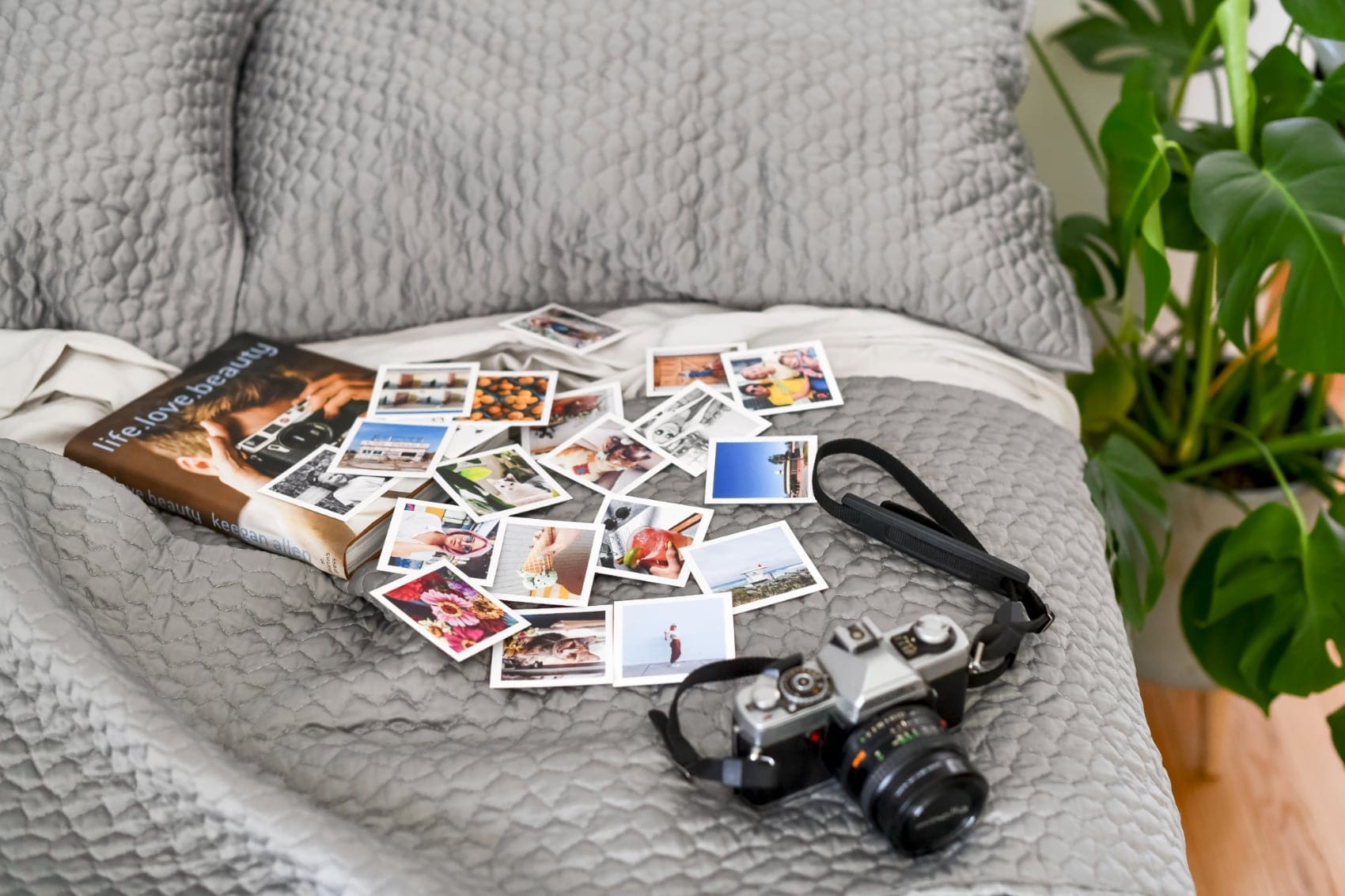
Your stars want a wall or a shelf. Order them as Square Prints, which come in sets of twenty on thick matte paper, in your choice of a clean white border or edge-to-edge. Lean them against books on a shelf, clip them to a string of twine, or build a small gallery wall. No hammer, no pressure.
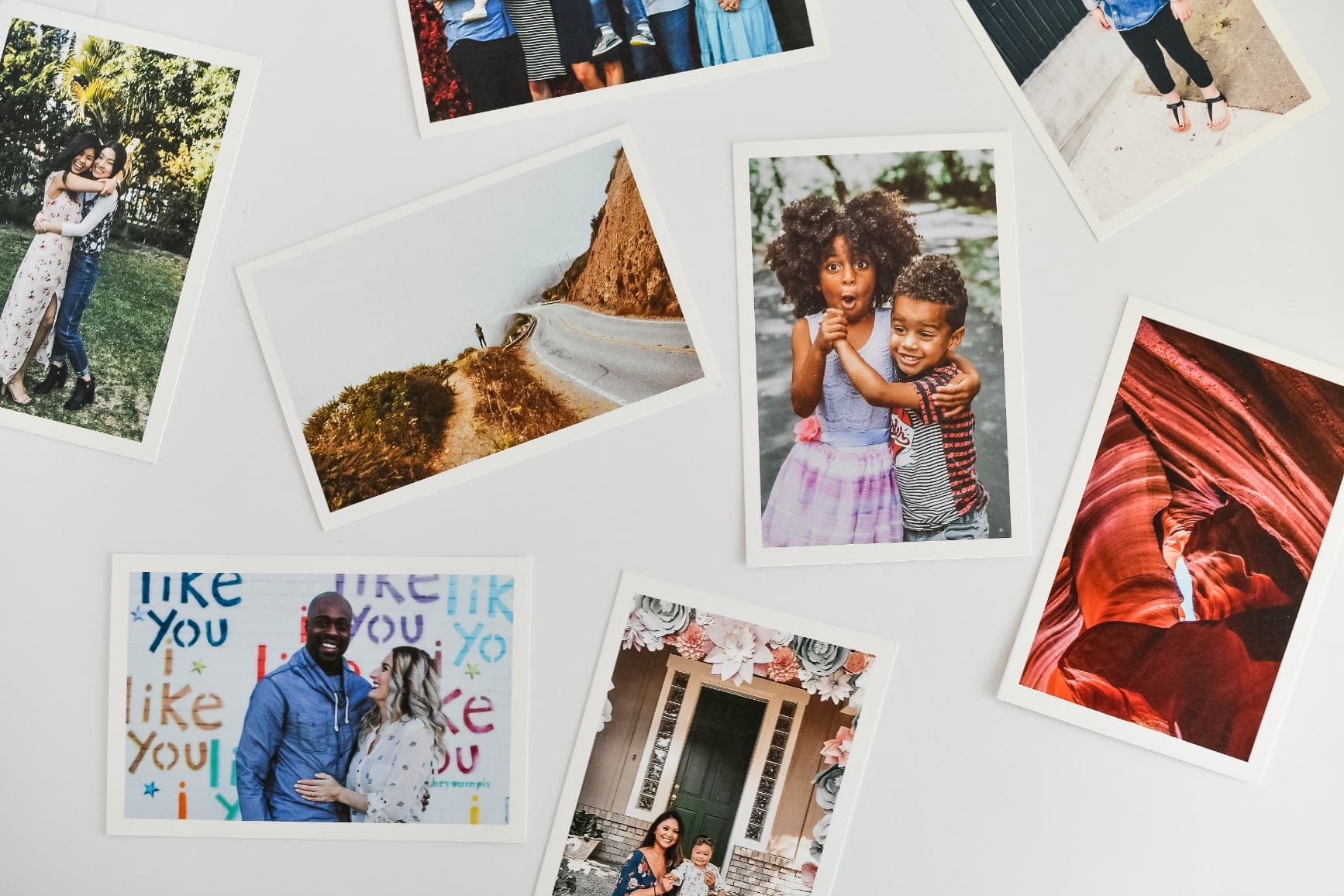
Not every keeper is a square, and that's fine. For the wide landscapes and the tall portraits, Classic Prints give you the same thick matte paper in familiar 4x6 or 5x7 film sizes, with the same white-border-or-edge-to-edge choice. They're a modern take on the photo prints you grew up with, and they let a sunset stay wide and a doorway portrait stay tall.
Your story groups want a spine. Gather each event into a Photo Book, starting at $15 for a softcover and holding up to 100 photos. There's something a digital scroll just can't give you about sitting down with a book of one good year. It's the difference between having the photos and actually seeing them.
The rest? Leave it in the cloud and forget about it. You ran the questions, you trusted the answers, and you turned a source of low-grade guilt into a handful of things you'll love. That is a good afternoon's work.
Feeling inspired?! Print your keepers.


