


Indigenous Peoples Day 2026 falls on Monday, October 12, the second Monday in October. It is not a federal holiday, though a growing number of states and cities now recognize it. You do not need a ceremony to mark it. Take a walk, notice the ground under your feet, and photograph the land you actually live on.
That is the whole ritual. Learn a little about the place you stand, take one honest picture of it, and print that picture for your wall as a year-round reminder. Here is how we like to do it. 🙂
1. Get the date right, then keep it simple
Mark October 12 on your calendar and leave the rest light. Indigenous Peoples Day honors the original inhabitants of this land and their ongoing presence, and the most respectful thing many of us can do is pay attention. No hashtag required.
A quiet, personal practice beats a performative one. Read a little, walk a little, and let the day be about noticing rather than posting. The photo comes later, and it is the easy part.
2. Start where you are standing
Before you shoot, learn whose land you are on. The interactive map at native-land.ca lets you search your city or ZIP code and see the Indigenous territories, languages, and treaties tied to that spot. Its "Know Where You Stand" guide walks you through it gently.
One honest note. The map tells users plainly that it "does not represent or intend to represent official or legal boundaries of any Indigenous nations." Treat it as a doorway, not a deed. If a name pulls at you, look it up and read further from the nation itself.
This is also the moment to learn what a land acknowledgment is. The National Environmental Education Foundation describes it as "a public statement of the name of the traditional Native inhabitants of a place" that "honors their historic relationship with the land." You do not have to say it out loud. Sometimes it is enough to know the name of the ground in your photo.
3. Take the walk and try three photo prompts
Now the fun part. Go somewhere local and unhurried, a park, a riverbank, the edge of a field, the hill behind your street. Bring your phone or your camera. Here are three prompts we come back to.
Shoot wide first. Frame the whole view, the horizon and the sky above it. Wide shots hold the feeling of a place better than close-ups do. Try it in soft morning or late-afternoon light, when the color is warm and the shadows are long.
Then find one detail. A single oak leaf, a seam of moss on stone, the water moving over gravel. Details remember the texture of a place. Pair one wide frame with one close one and you have a small story of the land.
Photograph the walk itself. The muddy trail, your dog nosing the grass, a friend a few steps ahead. The land is also where your ordinary day happened, and that is worth keeping too.
4. Print one, and keep it up all year
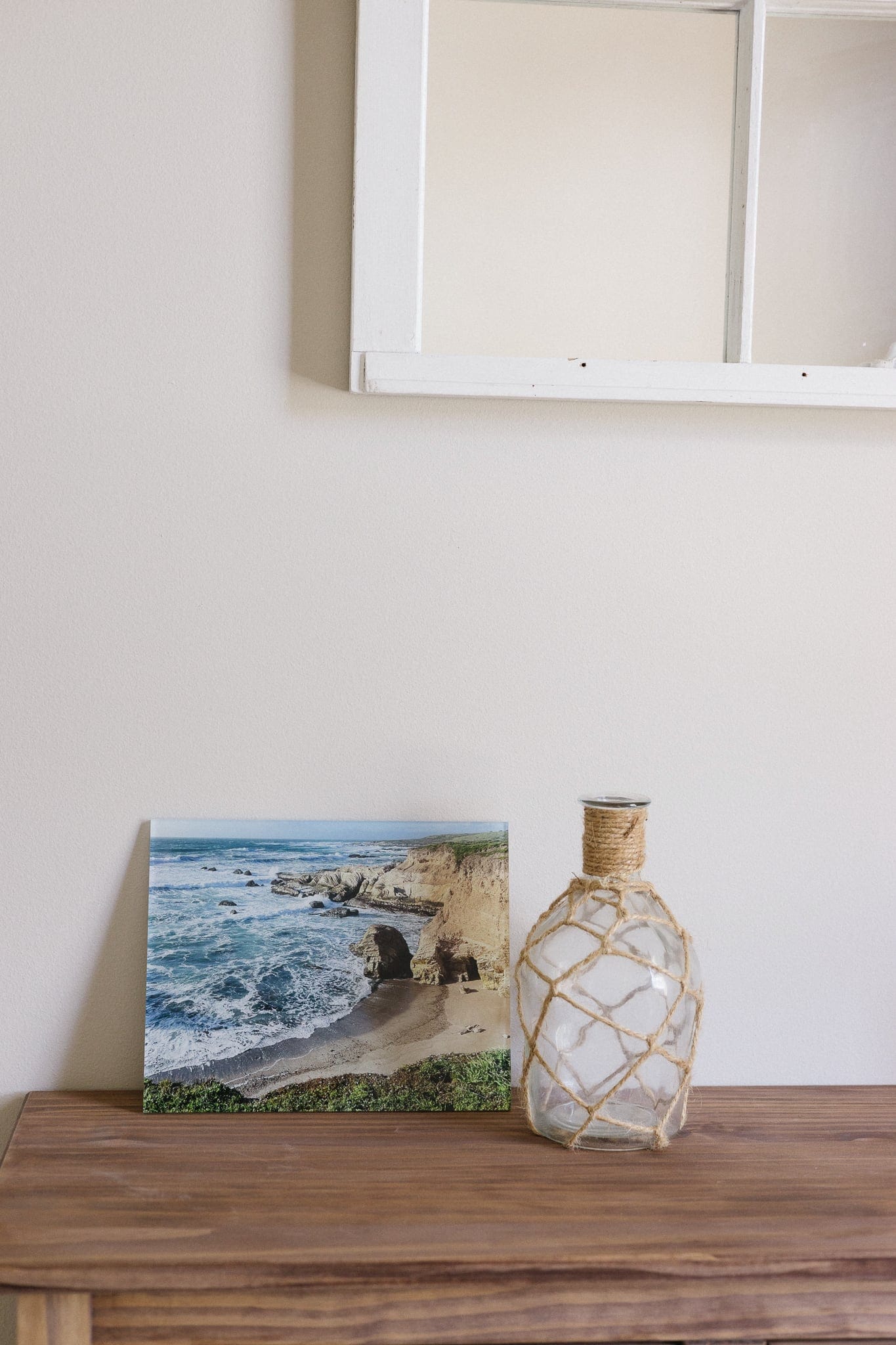
A landscape photo does its best work on a wall, not buried in your camera roll. Pick your favorite frame from the walk and give it room to breathe.
For a calm, gallery feel, Fine Art Prints sit beautifully in a hallway or above a desk. They come on thick archival matte paper in sizes from 8x10 up to 20x24 inches, from around $30. A wide horizon finally has room to stretch. Want something bigger and bolder? An Engineer Print turns a single landscape into a three-foot-wide statement on light, easy-to-hang paper, from about $40.

No hammer, no pressure. A Wood Block lets you prop the print on a shelf for around $12, then swap it whenever you like. Keep this year's frame up until next October, then take a new walk and print a new one. Over time you build a small archive of the same land, changing with the seasons and with you.
Feeling inspired?! Learn the name of the ground you love, then print the view and let it stay.


